
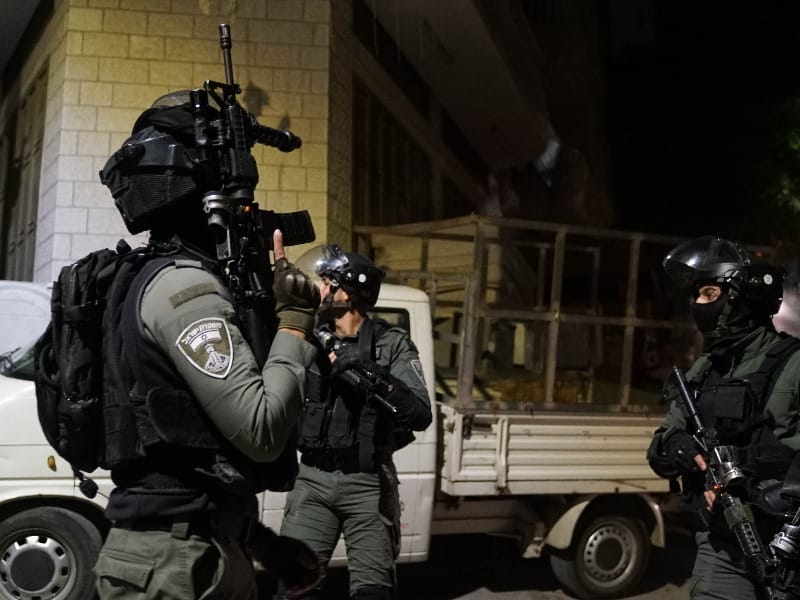
You’ve heard a lot about them. More than that, you’ve seen them. Standing in the Old City of Jerusalem, wearing their special gray and black uniforms. It all looks very appealing, but how much of what goes on behind the scenes have you actually heard? What do you know about Magav, Israel’s most requested unit?
Magav, short for Mishmar HaGvul (known in English as the Border Police), has skyrocketed in popularity in the past few years. As of today, it is reported that roughly 1 out of 22 applicants are accepted into the unit. Their job is unique, not shared by any other unit. Though appearing militaristic, Magav is a branch of the Israeli Police. As much as you’ve seen them around the Old City of Jerusalem, guarding it is only one of their many responsibilities.
What does this mean for someone considering drafting into Magav? Why should it matter?
Magav is divided into areas of operations such as Jerusalem, West Bank, Center, etc. Each of these are known as a machtab (short for מפקדת חטיבה- brigade headquarters). Each machtab has its own set of missions, units, and rules that allow them to specialize in the region they’re situated in. For example: the units located in the Center put a much higher emphasis on law enforcement and rarely engage in counter-terrorism. When one drafts to Magav, they need to understand the associated uncertainty. They may be assigned to a region like Tel Aviv, with an emphasis on everyday law enforcement, as easily as the West Bank, which deals predominantly with counter-terrorism.
So how does it work?
The first step in drafting to Magav is requesting it in your “manilla” – the questionnaire where you list the five units that are of the most interest to you. The army will try to assign you, to the best of their ability, to one of these units. If you’ve already filled out your manilla and did not include Magav, you can update it by calling the draft office.
Due to the high demand among conscripts, many resort to using personal connections in order to maximize their chances of being accepted. As a result, the best course of action is to utilize any connections you may have. Whether through a program, friends, family, or someone who knows someone who is acquainted with high-ranking officers, having connections helps.
The first part of service in Magav is four months on a base in the West Bank known as “Michmash.” In Michmash, you will learn most of the skills needed in the field – riflery, riot control, and a lot of urban warfare. You’ll learn about your job as a police officer and your limitations under the law. Due to Magav’s purpose- protecting civilian-dense areas- you’ll learn to fight in urban settings with both hostile and non-hostile elements.
During the course, you will be asked to write which machtabim interest you. While it’s wise to consider your options, your final assignment largely comes down to luck and connections rather than preference.
After four rough months of training, you’ll be assigned to your machtab. Most recruits are assigned to the West Bank or Jerusalem, as these are the two largest areas in Magav’s area of operation.
In Magav, there’s a running joke- You’ll need to choose between meaningful and challenging work or the luxurious conditions that Magav is known for.
Bases outside the West Bank are known for their facilities. There, you’ll sleep in rooms with fewer people, without bunk beds, eat food prepared by a catering service, have janitors that clean the base, and enjoy the expansive budget the police have to offer. The missions largely consist of regular police work, with occasional low-risk arrests. Every day, soldiers are given an allowance to use at gas station stores and select cafes. It is common for soldiers to pool their allowances and to organize a squad-wide evening with food and drink. Because of the perks afforded to these units, soldiers are able to bond with one another during routine missions, as well as during free time. For those looking to be in an active and operational unit, but would rather not be in harm’s way, units such as these are ideal for a meaningful service.
Conversely, if assigned to the West Bank, you will not experience the budget and facilities that Magav is known for having. You’ll be under the IDF’s command, and that includes the budget. Much of the gear you receive will be secondhand. It took over half of my service just for my company to receive proper red dot sights which are crucial in improving the aim of a rifle. All units outside of the West Bank, as well as all IDF combat units, are issued them the day soldiers receive their rifles. Base conditions vary, food quality is inconsistent, and your unit will handle cleaning and cooking duties, unlike other Magav units with dedicated staff. Your assignments, however, will be as good as they get. While some are boring and static, there are plenty of aggressive and action-packed missions. Many of these can be quite complex and span entire nights. The connections you create with your squad mates during these times will be meaningful. You will learn to support and rely on your friends, strengthening the bonds between soldiers.
Magav is known for including people from all walks of life. Having a multicultural unit allows for each squad to use their skills in law enforcement to the best of their abilities. While at first it may be a culture shock, you will learn to love and accept the people you serve with. You will find yourself forming friendships with people you never thought you would, and learning to get along with people vastly different from yourself.
All in all, the choice to push for Magav is not one to take lightly. It takes a combination of sticking up for yourself and luck. Those willing to accept the risks – and the possibility of not receiving their preferred assignment – may find the experience deeply rewarding.
 Tzevet Mikey - צוות מייקי